Episode Description
“Israel doesn’t just broadcast to the world ‘we have doctors that are held without any sort of charges for the past two years’; they’re not going to give that to the public on a silver platter. People need to inquire.”
Join PHRI’s Maha Loulou and Lee Caspi for a discussion about our campaign demanding the release of 14 doctors from Gaza who have been held by Israel, without charge and subject to grave torture and rights violations, for periods ranging from 1.5 to 2.5 years. We share some of their individual stories and what is happening behind bars, away from the public eye, to a group of highly skilled medical professionals who are desperately needed back home.
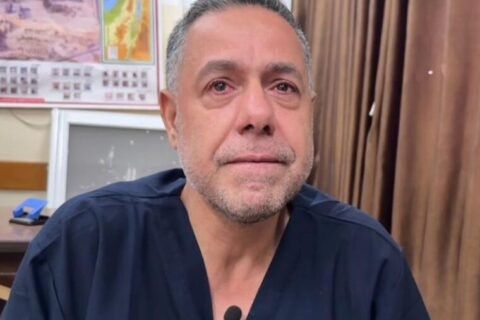
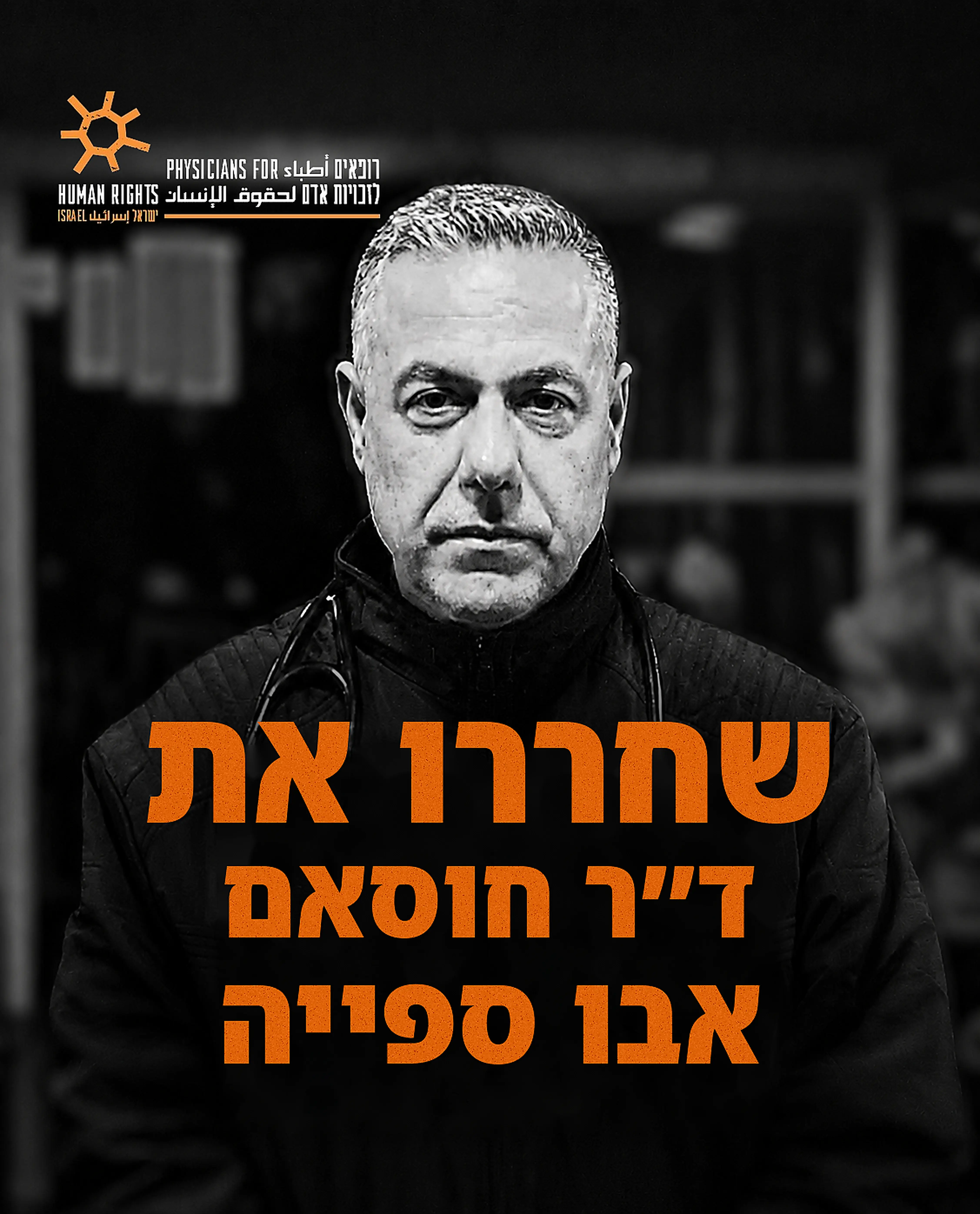
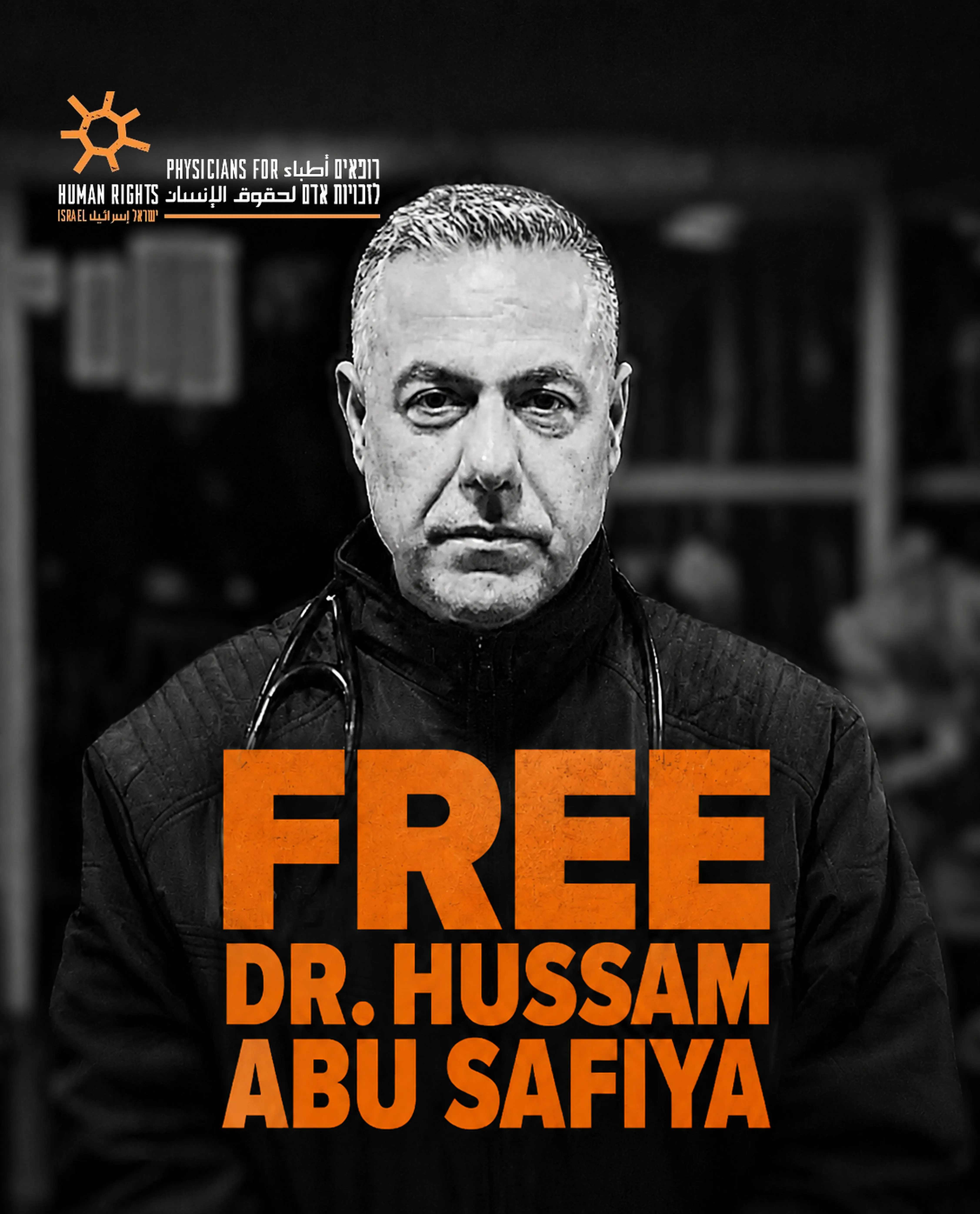
This episode was recorded on June 1st, a mere two days before PHRI received a firsthand report from Dr. Hussam Abu Safiya’s lawyer about his grave condition and the imminent threat to his life. While we work around the clock to try to save Dr. Abu Safiya and bring greater visibility to his case, we are continuing our efforts to release all 14 Gaza doctors still held in Israeli detention.
EPISODE TRANSCRIPTION
Lee Caspi
Welcome to Diagnosing the Barriers, a podcast by Physicians for Human Rights Israel.
Lee Caspi
Through our conversations on this podcast, we explore aspects of the right to health and violations of this right, as well as other interrelated rights in the areas under Israeli control between the Jordan river and the Mediterranean Sea.
Lee Caspi
I’m your host, Lee Caspi.
Lee Caspi
Today we’re joined by Maha Lulu from phri’s Prisoners and Detainees Department to discuss our campaign demanding the release of 14 doctors from Gaza who have been detained by Israel for over a year without any charges being brought against them.
Lee Caspi
Thank you for joining us, Maha.
Maha Loulou
Thank you, Lee, for initiating this conversation.
Lee Caspi
So before we dive into the wider issue and PhRI’s campaign and efforts to release these doctors, I think it would be helpful to our listeners if you could tell us about one of the doctors, one of these people for whose release we’re campaigning.
Lee Caspi
Can I ask you to choose one doctor and tell us about who he is, where he works and how long he’s been in Israeli custody?
Maha Loulou
Yes.
Maha Loulou
So one of the cases we’ve worked on the longest between the 14 doctors that we’ve been campaigning about is Dr. Raed Mahdi.
Maha Loulou
He’s a 53 year old pediatrician.
Maha Loulou
He’s the husband of Ms. Saham Al Khatib and the father of five children, Bisan, Saja, Albara, Fajr and Hala.
Maha Loulou
He’s been the director of Muhammad Durra Children Hospital since 2021.
Maha Loulou
Dr. Mahdi was arrested in the beginning of December 2023, meaning he’s been held in administrative detention for two and a half years now without any charges being filed against him.
Lee Caspi
Wow.
Lee Caspi
I feel like I already have a lot of follow up questions.
Lee Caspi
One thing that I would be interested in hearing is so you know his children’s names and you know about his, his wife.
Lee Caspi
Have you been in touch during this period?
Maha Loulou
Yes, we have.
Maha Loulou
We’ve been in touch with all of the 14 doctors families since the beginning of our campaigning regarding the doctors.
Maha Loulou
We keep them updated regarding visits, regarding any information that we have regarding any developments within our campaign, our petition and so on and so forth.
Maha Loulou
We actually got this information from his wife directly while we were thinking about how to go about this campaign, how to try to show these doctors in a way that is as human as possible.
Maha Loulou
We really wanted to emphasize their families.
Maha Loulou
The fact that Fajr, Anbara and Bisan and Hala are all waiting for their father to come back.
Maha Loulou
You know, beyond the fact that he is a doctor, he’s needed.
Maha Loulou
He’s not only needed by his Patients.
Maha Loulou
He’s also needed by his wife and children.
Maha Loulou
Children.
Lee Caspi
I think it’s super, super important that this campaign and your work with people in this situation always seeks to stress that these are human beings who are living under impossible conditions, truly impossible conditions.
Lee Caspi
I mean, while he’s been detained for two and a half years, they’ve lived through genocide, they’ve presumably, I know nothing about this family, been displaced, probably repeatedly, all of the conditions that people are living through in Gaza.
Lee Caspi
And I apprec you giving us this opening.
Lee Caspi
I think it’s important when we’re speaking about these policies to remember that the numbers, even the small number of 14, is made up of real people.
Lee Caspi
So in this case they happen to be highly skilled and highly educated people who are urgently needed at their jobs in Gaza.
Lee Caspi
Can you share a little bit before we jump into the campaign itself more broadly about the wider phenomenon?
Lee Caspi
How common was it for Israel to arrest Doctors during the two and a half years before the so called ceasefire in October 2020?
Lee Caspi
And what do you know about the conditions in which most people were held?
Maha Loulou
So since the start of the genocide in Gaza, Israel has been systematically arresting medical personnel.
Maha Loulou
We’re talking about each incursion they did to a hospital, whether it was Al Shifa, Nasser Hospital, Kemal Erdogan, all of these hospitals ended with the arrests of tension, hundreds of medical personnel, whether they’re doctors, medics, nurses and so on and so forth.
Maha Loulou
We also noticed a targeting of medical personnel, generally, you know, some medical personnel, not necessarily doctors, also doctors, but not necessarily only doctors had told us that they were arrested from checkpoints.
Maha Loulou
You know, when you’re asked your name, what you do, and so on and so forth.
Maha Loulou
Once they tell them I’m a doctor, I’m a nurse, they are taken.
Maha Loulou
So we’ve also witnessed in the past two and a half years that Israel has arrested close to 450 medical workers.
Maha Loulou
These includes again doctors, nurses, paramedics and a plethora of medical personnel.
Maha Loulou
And while some were released during prisoner exchanges, at least 95 medical personnel still remain in Israeli custody, 80 of which are from Gaza.
Maha Loulou
In terms of condition, I guess we have published a report previously on the torture of medical personnel from Gaza, which encompassed several violations in terms of the right to health as well as just violations of human rights in general.
Maha Loulou
We’re talking about overcrowding, we’re talking about starvation, severe medical neglect, and on top of that, a severe lack of legal procedures and inhumane treatment that amounts to torture.
Maha Loulou
Something that did stand out to me was the use of torment in terms of psychological torment for prisoners.
Maha Loulou
A lot of prisoners told us that when they were forced to do the count in the morning, they were forced to sit in a strained position, like behind, you know, on your knees, hands behind your back, head down low.
Maha Loulou
And then the guards would force you to say, good morning Captain, or after the count, thank you, Captain.
Maha Loulou
And you know, these can seem a little, you know, small humiliation.
Maha Loulou
Exactly.
Maha Loulou
It can seem very small when you have, you know, the other things are starvation and medical neglect, but still these little things, when you consider that they happen on the daily, several times each and every single day, you start to have like a clearer image of what the conditions beyond the starvations, conditions beyond the physical abuse were like within.
Lee Caspi
Especially if you consider the fact that many of these people are in their lives back home, senior physicians at leading medical institutions and not only are they being physically abused and humiliated, they’re being humiliated maybe by a 19 year old soldier.
Lee Caspi
And I think it’s really part of the, it’s like this inversion of the dynamics that most of us normally have when we go to see a doctor.
Lee Caspi
You have this deference for their authority.
Lee Caspi
And I think we all automatically tend to view doctors as people imbuing authority and suddenly they’re like stripped down to the most basic, I guess, nothingness as they’re perceived by this system.
Lee Caspi
Before continuing a little bit, I do want to ask about the idea of administrative detention and the holding of so many people from Gaza.
Lee Caspi
We don’t have to delve too much into this issue, but what exactly is the legal framing, such as there is of the fact that they are in Israeli detention?
Lee Caspi
Is it normal administrative detention?
Lee Caspi
Can you say a few words maybe about how people were arrested?
Lee Caspi
Are they ever brought before a judge?
Lee Caspi
How does that whole process work?
Maha Loulou
So basically the law that Palestinians from Gaza, including the doctors, are held under is called the Unlawful Combatant Law.
Maha Loulou
It’s a law that has been installed since the early 2000s and it was used.
Maha Loulou
So basically it was used as a tool at the time for Lebanese prisoners to be used as bargaining chips in hostage exchange deals or so on and so forth.
Maha Loulou
In its core it’s administrative detention.
Maha Loulou
It means that you are not to see a lawyer, you are for extended period of time.
Maha Loulou
That can be re.
Maha Loulou
Extended.
Maha Loulou
The base is 90 days and they.
Lee Caspi
Can add on it indefinitely.
Maha Loulou
Indefinitely, yes.
Maha Loulou
And you can see that with our doctors that are all held under the unlawful combatants law.
Maha Loulou
None of them were brought in front of a judge.
Maha Loulou
None of them were.
Maha Loulou
Almost 99% of them were not allowed representation by a lawyer.
Maha Loulou
So it’s basically, it can be read in terms of legality as administrative detention, but it is not in the law as administrative detention.
Maha Loulou
It is the unlawful combatants law.
Lee Caspi
Okay, yeah, I think this is important framing.
Lee Caspi
And how many people from Gaza are held under this kind of legal regime now?
Maha Loulou
So all of the people, as of now from Gaza are held under the unlawful combatants law.
Maha Loulou
As far as we know, we’re talking about close to 3,000 prisoners from Gaza that are held under that law, which again, means that these people do not have any legal representation, do not have, like, they have not been to court, they have not been accused with anything to begin with in order for them to try to build any sort of case around it or any sort of defense around it.
Maha Loulou
So, yeah, all of the Palestinians from Gaza are held under the unlawful command.
Lee Caspi
So there’s basically no need for the Israeli authorities to present any justification.
Lee Caspi
They can just hold people.
Lee Caspi
And if we’re going back to the specific campaign we’re discussing, I know that we work on many other types of people held in detention, but this is a specific, specific focus on doctors within a wider focus on healthcare workers.
Lee Caspi
How do you view the fact that so many doctors and other healthcare workers are still in detention nearly nine months after the October 2025 prisoner exchange?
Maha Loulou
So this answer is going to have a lot of levels to it.
Maha Loulou
So despite the supposed ceasefire that went into effect in October of 2025, we can see that Israel is still blocking aid in general and medical aid, specifically aid equipment, all of that from going into Gaza.
Maha Loulou
We see that they continue to block their rehabilitation of the Gaza healthcare system.
Maha Loulou
We see that Israel is still declaring that they want to get Gazans to leave, to voluntarily migrate, or whatever that means.
Maha Loulou
So we see the fact that doctors are still helped despite having no charges is a part of that.
Maha Loulou
It’s a part of Israel’s method of preventing the rehabilitation of Gaza in general and Gaza’s healthcare system in particular.
Maha Loulou
So we also believe that Israel is afraid of what the doctors will have.
Lee Caspi
To say after their release about what happened to them.
Maha Loulou
Yes.
Maha Loulou
So this is partly because they know that international communities and media in general are waiting to hear the stories that come out.
Lee Caspi
Do you think this.
Lee Caspi
Sorry to interrupt you.
Lee Caspi
Do you think this is because, as I sort of said earlier, they’re perceived as more reliable witnesses than other people who have already been released and talked about the torture they experienced.
Lee Caspi
Why are the doctors a threat?
Maha Loulou
The doctors are a threat, in my opinion.
Maha Loulou
Again, we don’t know for sure because so just a month ago, the State Comptroller of Israel mentioned in a report that he published that the release of Dr. Muhammad Abu Salmiyeh back in June 2024 really hurt Israel’s image.
Lee Caspi
He was the director of Al Shifa Hospital.
Maha Loulou
Yes, that is very true.
Maha Loulou
So because when Dr. Abu Salmiyeh came out, he kind of proved like after he was released, he proved that his release kind of proved that he was held unlawfully.
Maha Loulou
He was held for no reason for all of this period of time.
Maha Loulou
And his testimonies of severe torture, of ill treatment, of starvation, of all of that within Israeli prisons really got the echo.
Maha Loulou
The international.
Maha Loulou
It sparked international interest.
Maha Loulou
So Israel does view that as a threat because at the end of the day, it severely hurts the image of Israel.
Maha Loulou
It kind of proves that all of these testimonies that came out, not only by doctors and not only by Gazans, you know what I mean, Palestinians from Gaza, that these testimonies are not something fantastical or unbelievable.
Maha Loulou
You know, it’s not that something.
Maha Loulou
It’s not something that someone said to over exaggerate or something that could have been like a personal experience of that person because he was in prison and the conditions in prison are not nice either way and so on and so forth.
Maha Loulou
So these kind of prove that there’s something beyond in these testimonies.
Lee Caspi
It’s an interesting point to sort of linger on perceptually because I think those of us who work on the issue of the human rights of Palestinians, and especially Palestinians like yourself, are very used to the idea that the world doesn’t listen to Palestinian witnesses of atrocities.
Lee Caspi
People in Gaza were speaking for a very long time about many of the things that they experienced there.
Lee Caspi
And it was often only the case once international journalists began to expose certain things, once Israeli human rights organizations began to expose them, that they got any kind of echo.
Lee Caspi
And I think it’s interesting to look at this and think in a way maybe doctors are sort of like in people’s perception around the world, like one step above, they get a little bit more of an ear maybe than just a normal person who’s not a doctor from Gaza might get, even though they may have experienced exactly the same types of torture and conditions of detention.
Lee Caspi
And it’s just another sad thought among, you know, many.
Maha Loulou
It could be it’s partially because, you know, doctors are a group that are protected by international humanitarian law.
Maha Loulou
Civilians, I mean, I want to say not so much, but you know what I mean?
Maha Loulou
You know, doctors have their position even in the legal sphere as something that is extra protected as something that is not to say that whatever, like in a normal situation where a civilian who is not a doctor, that international law does not protect him from being tortured or being ill treated.
Maha Loulou
But doctors specifically, especially in war zones, have specific protections.
Maha Loulou
I think that’s partially why they, whatever release doctors that came out and came out with whatever they had to say had a bigger echo than, you know, your regular civilian that was tortured.
Lee Caspi
Yeah, it could definitely relate to the wider protections of medical facilities and staff under international law.
Lee Caspi
I hadn’t thought of it like that.
Lee Caspi
I think maybe it also relates to the fact that it’s a profession where people tend to exchange with people from other side parts of the world.
Lee Caspi
It’s a massive network of people.
Lee Caspi
Some of these detained doctors may have studied abroad.
Lee Caspi
I don’t know if you know this about their backgrounds, but may have colleagues in the west who know and believe them.
Maha Loulou
That is very true.
Maha Loulou
For example, Dr. Khaled is.
Maha Loulou
He was one of the first to be released back in 20.
Maha Loulou
I’m not sure if it was 25 or 24, but he, he, exactly.
Maha Loulou
He studied abroad.
Maha Loulou
He had these, these people that studied with him.
Maha Loulou
He wrote for medical magazines that people like people knew him.
Maha Loulou
So he had a sort of, they had his back sort of to speak, you know what I mean?
Maha Loulou
A lot of people, a lot of organizations, a lot of individuals came out and advocated for his release.
Maha Loulou
So his story became more known and at the end he was released.
Maha Loulou
I don’t know if it was, I don’t think it was because of the pressure that was applied.
Maha Loulou
But at the end of the day, he was, his name was known, people knew him.
Maha Loulou
People knew what is happening to him as we speak because they knew him.
Maha Loulou
He had, you know, these connections or not connections, you know, these people, these friends, these colleagues that advocated for him.
Lee Caspi
It’s very interesting to think about this and I think it relates in a way to the campaign that your department is leading, which is getting quite a lot of international and local, well, more international, I guess, visibility.
Lee Caspi
And I would like to delve into that a little now.
Lee Caspi
So can you tell us a little bit about this campaign?
Lee Caspi
You did tell a bit about how you approached it in terms of involving the families and these people’s personal lives as well.
Lee Caspi
But what is your team doing to try and get these 14 doctors released?
Lee Caspi
How does the campaign look?
Lee Caspi
What are you getting in terms of response, if you can say anything about that too?
Maha Loulou
So after the October deal, we had hoped for all Palestinian hostages to be released.
Maha Loulou
That would include medical personnel, but that obviously did not happen.
Maha Loulou
We generally do not have much trust in the Israeli legal system.
Maha Loulou
It is a fact that no Palestinian was released through that system.
Maha Loulou
They were only released through hostages, deal or hostage exchanges.
Lee Caspi
Not a single person arrested from Gaza has been released during a legal proceeding.
Maha Loulou
I don’t.
Maha Loulou
A legal proceeding?
Lee Caspi
Yeah.
Maha Loulou
No.
Lee Caspi
Wow.
Lee Caspi
No.
Lee Caspi
There were some people who were just arrested and then sent home, right?
Lee Caspi
Without any.
Maha Loulou
Yes, some people were arrested internally, like they were kept within Gaza and then they were released.
Maha Loulou
Some people were kept like in Sdetiman only and then were released.
Maha Loulou
Some people were held in Svetiman, then moved to other IPS facilities and then released during the exchange deals.
Maha Loulou
But none were brought to a judge.
Maha Loulou
None were given like a verdict of guilty, not guilty.
Maha Loulou
So, yeah, no, none of the Palestinians in Gaza were brought, were giving that sort of legal procedure.
Maha Loulou
And that’s why we don’t generally have trust in it, because it’s clearly very flawed.
Maha Loulou
So although we do not have much trust with it, we submitted our petition for the release of 14 doctors to the Israeli Supreme Court on April 2025.
Maha Loulou
We demanded the cancellations of the warrant against 14 doctors detained from Gaza.
Maha Loulou
All have different specialties.
Maha Loulou
Some are orthopedics, some are surgeons, some are pediatric people that hold positions that are very important considering what happened to the Gaza healthcare systems, what’s available right now in terms of medical equipment and treatment within Gaza.
Maha Loulou
So we decided to file that petition as a group encompassing the 14 doctors with different specialties, like I said, because firstly, like I said before, doctors are a group that is protected by international humanitarian law.
Maha Loulou
Secondly, none of the 14 doctors that we have filed the petition in their name have been accused or charged with anything.
Maha Loulou
And lastly, while they.
Maha Loulou
None of them, none of the 14 face any charges, most of them were.
Maha Loulou
All of them were held over one and a half years.
Maha Loulou
Some even like, were held for over two years or two and a half years.
Maha Loulou
You know, like we’re talking about the beginning of the genocide.
Maha Loulou
They were arrested until this day.
Maha Loulou
They are held without any charges.
Maha Loulou
That is two and a half years out of someone’s life for no apparent reason, you know.
Maha Loulou
So the court still didn’t give release orders and the army is still delaying their response over and over and over again.
Lee Caspi
And the petition is against the army.
Maha Loulou
So the petition was submitted as a request to the chief of staff of the military in order to cancel the administrative detention warrants against the 14 doctors.
Maha Loulou
Basically, we requested that.
Maha Loulou
We cited the fact that the healthcare system in Gaza really needs its doctors.
Maha Loulou
It cannot start rehabilitating before the said doctors can come back to their work and start to rehabilitate themselves.
Maha Loulou
And like I said, most of the doctors that we’re talking about are specialists.
Maha Loulou
They’re much needed in Gaza’s hospitals today.
Maha Loulou
So the fact that both the Supreme Court and the Israeli military is basically is giving no response.
Maha Loulou
And two months later we are still waiting.
Maha Loulou
We kind of view that the arrests of the doctors are becoming more political than they are security related as opposed to what Israel continues to claim that these doctors are security threats.
Maha Loulou
Security threat.
Maha Loulou
They pose danger.
Maha Loulou
We cannot release them.
Maha Loulou
Although like we said before, Dr. Mohammed Abu Salmi was in their same position.
Lee Caspi
So yeah, from the hospital that was the most consistently accused of exactly having military activity.
Maha Loulou
So we,.
Lee Caspi
So we submitted the petition.
Lee Caspi
I assume we don’t have that much hope for this to go our way.
Lee Caspi
So what else can we do to, I mean, how does it look publicly or.
Maha Loulou
I still feel like we don’t have the privilege to abandon any means we don’t have.
Maha Loulou
Even if we don’t trust the Israeli legal system, even if we don’t have much hope.
Maha Loulou
This system is the same system that banned the RCRC visits to prisons.
Maha Loulou
It’s the same system that closes investigations into deaths of Palestinians within prisons.
Maha Loulou
Walid Ahmad, the 17 year old that was starved and beaten to death, the Israeli legal system closed that investigation without any, you know, any end result.
Lee Caspi
But the ICRC example for our listeners, that’s the International Committee of the Red Cross is actually a surprisingly positive precedent because while they were banned from visiting Palestinians in detention for two and a half years, a High Court case that we joined with some partners in the human rights community managed to reinstate those visits finally very recently.
Lee Caspi
Right?
Maha Loulou
Yes, very true.
Maha Loulou
But you know, to think that to begin with they were banned.
Maha Loulou
You know, it just draws the way that the Israeli legal system is not on our side.
Maha Loulou
No, but still this does not mean that we can abandon any sort of, any means that we can use to try and advocate for the release of these doctors.
Lee Caspi
We have to try.
Maha Loulou
We have to, we have to.
Maha Loulou
And we are.
Maha Loulou
And we cannot like take, take apart the, the healthcare system from the doctors.
Maha Loulou
We cannot take apart the, the, their need in the hospitals from how are they treated within the, the, the, within Israeli detention.
Maha Loulou
This is something that is all interconnected and I think we have to try everything.
Maha Loulou
And any mean that we have, especially as an isra, we have tools that a lot of international organizations do not have.
Maha Loulou
So I feel like even if we do not have the full trust that it’s going to, quote, unquote, necessarily work.
Maha Loulou
I feel like we have to try.
Maha Loulou
We have to do it.
Lee Caspi
And I think that we often view court cases like this as part of a wider effort to push for the policy change that we want, which also comes with ensuring there’s visibility and people are talking about it in the world.
Lee Caspi
And that’s exactly I think, what the campaign is trying to do and has done fairly successfully.
Lee Caspi
If you can say a little bit about the actual public side of the campaign and what sort of partners are responding to this, how are they responding?
Lee Caspi
Do you see pressure mounting for the release of these 14 people?
Maha Loulou
So we decided to launch this campaign in order to apply more pressure for the release of the doctors.
Maha Loulou
The point, again, was to dehumanize them.
Maha Loulou
We always view them as these heroes in Dr. Coats, but at the end of the day, they’re human beings.
Maha Loulou
And like you said, a lot of people usually forget that side.
Maha Loulou
So the campaign, the point of the campaign was again to refocus on the humans within this petition.
Maha Loulou
Not the 14 doctors, but Dr.
Maha Loulou
Raid Mahdi and Dr. And Dr. Mous Absiman and Dr. Mahmoud Halla and all of these people that are people at the end of the day.
Maha Loulou
And we see that the reaction, especially in the international community, was very invested because they got that chance to actually see the people behind the white coats, the people behind the atrocious reports about starvation and torture and so on and so forth.
Maha Loulou
So we see a lot of partners, a lot of medical groups that are actually, you know, even the littlest things of, like, reposting to their own followers, of, like, talking about it to their own circles, you know, these type of things that make, maybe not over pressure, but more, how do you say, like, awareness.
Maha Loulou
More people are aware that these people are going through what they’re going through.
Maha Loulou
More people are aware of the consequences of keeping those people within detention.
Maha Loulou
More people are aware of who these people are, of their names, even the simplest their names, what they do beyond the 500 number.
Maha Loulou
We spoke, the 500 arrested personal medical personnel.
Maha Loulou
So it’s really good that we’re seeing a lot of interest that is coming from, you know, different communities, whether international, sometimes even national.
Maha Loulou
And I think it’s.
Maha Loulou
That was the point of the whole campaign.
Lee Caspi
I think a lot of people who listen to the materials that we put out or read them are.
Lee Caspi
They’re always wondering, but what can I do?
Lee Caspi
Like, this is horrendous.
Lee Caspi
We’re witnessing this reality unfold endlessly before our eyes.
Lee Caspi
And I’m just a citizen of Canada or, I don’t know, Brazil, whatever.
Lee Caspi
Let’s give an example from Europe, Italy.
Lee Caspi
So what can I do to in some small way know that I tried?
Lee Caspi
And I mean, I guess what you’re saying is visibility is a powerful tool for this kind of campaign, and we’re asking people to share the materials.
Lee Caspi
Is there anything else you can think of?
Maha Loulou
I can.
Maha Loulou
Actually.
Maha Loulou
We have to think generally.
Maha Loulou
We, as humans, we always have this feeling, especially when we’re looking into things that are so atrocious that you feel so small that you feel like you can’t do anything about it.
Maha Loulou
I do think even the smallest things matter.
Maha Loulou
Like you mentioned, even reposting or talking to people around you about these things and making them known, maybe this person that you were sitting with will go home and start googling about these things, inquiring about them.
Maha Loulou
Something beyond that we as individuals can do is basically, you know, addressing your, Your.
Maha Loulou
Your medical associations within where you live.
Maha Loulou
You know, making, Making.
Maha Loulou
Making it known to them that this is not something that sits well with me and it shouldn’t sit well with you.
Maha Loulou
In that way, you can mobilize.
Maha Loulou
I’m absolutely sure that not.
Maha Loulou
It’s.
Maha Loulou
It’s not something that individual people feel like.
Maha Loulou
If, if, if you talk to your surrounding, you will see that a lot.
Maha Loulou
You might see that a lot of people feel the same way as you.
Maha Loulou
So you have that power, you have that ability to start mobilizing in that way.
Maha Loulou
Write to your medical associations, Write to people you know, write to directors of hospitals.
Maha Loulou
Write to people that have bigger platforms than you, bigger options than you as an individual, as a sole individual.
Maha Loulou
These things can move a lot of things.
Maha Loulou
And we shouldn’t, like, view any little things from a reposting of a post to writing to a representative of some sort.
Maha Loulou
All of it is important.
Maha Loulou
We need to do all of it.
Maha Loulou
If you feel like you have to do something, then do something.
Lee Caspi
There was a very powerful moment, I think, for phri’s community when we don’t usually protest as an organization.
Lee Caspi
It’s not part of our mandate.
Lee Caspi
But during one of the protests to end the war, I mean, to end the war, because that’s how it’s presented to the Israeli public.
Lee Caspi
Here in Tel Aviv, we decided one week to join with members of our community, volunteer doctors and other health workers who held photos of detained healthcare workers from Gaza that we were representing or just knew about, had information about.
Lee Caspi
And I think a lot of people sort of stopped, looked at the pictures, asked Questions about it.
Lee Caspi
Even though, though we were already standing in the radical block of the protest amongst people who protest against the occupation, the information was new for some people that there are senior doctors being held without charge in Israeli detention.
Lee Caspi
And I think aside from the fact that we as a health focused organization have a sort of duty to voice those who are voiceless from within our community, it’s also just demonstrative of how little moments of doing a small action that you as an individual can do as a protester can actually bring something to new audiences that you didn’t even think about.
Maha Loulou
A hundred percent, 100%.
Maha Loulou
And it’s something you see in a lot of PHRI work in general, like in my work specifically.
Maha Loulou
Like you said, Israel does not just broadcast to the world.
Maha Loulou
We have doctors that are held without any sort of charges for the past two years.
Maha Loulou
They’re not, they’re not gonna give that to the public on a silver platter.
Maha Loulou
People need to inquire, people need to, and, and acts like this, small acts like this while standing with a picture.
Maha Loulou
And someone who, I mean it is, it’s the last person you would think would stop and ask you, oh, who is that?
Maha Loulou
What’s going on?
Maha Loulou
And just inquiring already does something, you know, So I feel like we as individuals have a huge role in these things.
Maha Loulou
And when each individual work, then we all work together and then that’s mobilization and that’s something that is extremely important in these types of issues.
Lee Caspi
So I do want to end this conversation by remembering who it is that we’re talking about and why.
Lee Caspi
I mean, we know why we’re calling for their release, but sometimes it can help to have a story that especially touches you.
Lee Caspi
So can I ask you to help us finish this conversation by telling us about one more doctor’s case that stands out to you in some way.
Maha Loulou
So I want to talk about Dr. Nohed Abu Tayami.
Maha Loulou
Dr. Nohad Abu Taymi is a 50 year old surgeon.
Maha Loulou
He’s the husband of Dr. Rawi Al Hazarin.
Maha Loulou
He’s a father of nine children.
Maha Loulou
He has five daughters and four sons.
Maha Loulou
Sons.
Maha Loulou
He’s the head of surgery at the Nasser Hospital.
Maha Loulou
He was detained on February 16, 2024, which makes him more than two years.
Maha Loulou
Yes, two years, five months almost.
Maha Loulou
Why I want to talk about Dr. Abu Taymi because when we conducted visits to, you know, not only medical personnel, but also people, detainees from Gaza, Dr. Abutayemi came up a lot.
Maha Loulou
And many prisoners attested that he actually performed medical procedures for them within detention.
Maha Loulou
When IPS doctors or medics would ignore prisoners calls.
Maha Loulou
Dr. Renault would go and do small little surgical procedures, removing abscesses, draining them.
Maha Loulou
From this KB’s outbreak that PhRI has touched on a lot, we see that a lot of prisoners were not.
Maha Loulou
Were kept for prolonged period of time without continuitive treatment.
Maha Loulou
Therefore, a lot of them would develop skin abscesses and things that would be left untreated for prolonged period of time.
Maha Loulou
It would cause inflammation.
Maha Loulou
The inflammation would cause abscesses.
Maha Loulou
The abscesses would not be treated by IPS doctors.
Lee Caspi
Can I just say, just for the people who don’t know, that IPS is the Israel Prison Service.
Lee Caspi
Sorry to interrupt.
Maha Loulou
Yeah.
Maha Loulou
So when the Israeli prison system doctors would not provide any treatment, doctor would go and provide that treatment for the prisoners while he himself is a prisoner, while he himself also suffered from scabies.
Maha Loulou
So that’s something that really, really, really stood out to me.
Maha Loulou
And it just really shows what a doctor’s oath really is.
Maha Loulou
In contrast, the contrast between a doctor’s oath and a doctor’s oath.
Maha Loulou
A doctor that is essentially a partner for torture, a partner for medical neglect versus a doctor that is being tortured, that is being neglected, but is still upholding his oath within these conditions.
Lee Caspi
You know, you said earlier in this conversation that you wanted to break down the stories of people being perceived as these superheroes, but honestly, that sounds like the behavior of a superhero.
Lee Caspi
Like, I can barely function after I’ve had a bad night’s sleep.
Lee Caspi
And somebody living through those conditions who is capable of still prioritizing, caring for others, it’s a really incredible thing.
Lee Caspi
And there was that film we screened at the Cinematheque.
Lee Caspi
I forget the title.
Lee Caspi
Do you remember it?
Maha Loulou
Doctors Under Fire.
Lee Caspi
Doctors Under Fire, yeah.
Lee Caspi
And there was, I think, Doctor or who was released and the day after he returned to Gaza went.
Lee Caspi
Went to work at the hospital, which is just astounding, especially when, as you say, we compare it to some of the ethical violations that we’ve witnessed here in the Israeli healthcare system.
Lee Caspi
But that’s topic for other conversations that we’ve had and will continue having.
Lee Caspi
Thank you so much for this truly very important conversation that gives a bit of a deeper insight into why we’re doing this, how we’re approaching it.
Lee Caspi
Is there anything else you’d like to say before we finish up our conversation today?
Maha Loulou
I just want to say thank you for initiating this conversation.
Maha Loulou
It’s a very important topic to keep afloat, especially when Gaza’s healthcare system is truly in need of rehabilitation and that rehabilitation cannot start without its doctors being back in their positions, trying to, you know, start helping or rebuilding whatever what was whatever what was whatever was destroyed in the genocide.
Lee Caspi
Thank you very much, Maha, and thank you to everyone who listened to I would like to welcome you to like and subscribe the podcast if you haven’t already done so.
Lee Caspi
And I would also like to welcome you to share any thoughts, comments or questions that you have with us over email.
Lee Caspi
If you would like to, you can write to me directly at leec L e e c phr.org.
Maha Loulou
Sam.