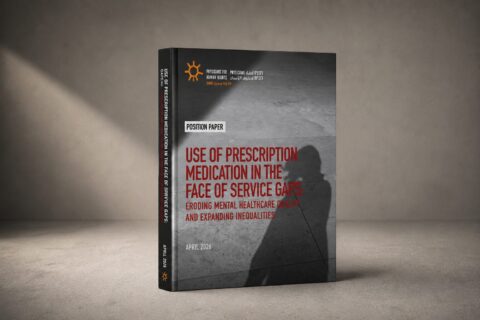
Read the position paper
English | Hebrew
Local reality since October 7 has proven what we have been warning about for years: the weakening of Israel’s public healthcare system and lack of investment in peripheral regions have severely harmed the capacity to offer adequate healthcare responses – both in routine and emergency times. Our latest position paper, “The Cost of a Weakened Public Healthcare System: Responses Since October 7 and Required Steps for its Recovery”, reviews the repercussions of draining Israel’s public healthcare system. This includes the failure to reinforce hospital structures in southern Israel, resulting in their compromised functionality on October 7, as well as the critical impacts of insufficient investment in rehabilitative care, particularly in peripheral areas – given their current urgent need.
We had hoped that after October 7, the government would finally realize the importance of strengthening the public healthcare system, acknowledging its irreplaceable role during emergencies, and consequently adjust its priorities by allocating necessary funds. Regrettably, this expectation was dashed by the government’s actions post-October 7 and its approach to the 2024 healthcare budget. Once again, it is the marginalized populations who bear the brunt of the healthcare system’s underfunding, including residents of the social and geographic periphery, people living in poverty, the elderly, and those facing mental health issues. The Israeli government has consistently shown its readiness to implement measures that disadvantage these groups, such as the introduction of copayments for mental healthcare.
Although the Ministry of Health announced the rollout of a national mental healthcare plan, its funding will not only rely on a health tax increase; for the first time, it will also introduce a copayment for mental healthcare services. Previously offered at no additional cost, patients will now be required to pay NIS 35 per session out of pocket. While children and welfare recipients are exempt from this fee, the prolonged nature of mental healthcare treatment means expenses for adults could reach up to NIS 140 per month and potentially higher in acute situations.
Despite the Ministry of Health’s recent assurances of its dedication to addressing disparities within the healthcare system, the proposal to implement a copayment implies that additional obstacles will be placed on disadvantaged populations seeking mental health support. This comes at a time when the removal of barriers to accessing mental healthcare services is more crucial than ever- in light of the collective traumas and the ongoing war.
We will continue advocating for these communities and for stronger public healthcare. We will keep reminding the government that a robust public healthcare system is indispensable to our society’s resilience, both in times of routine and during emergencies.